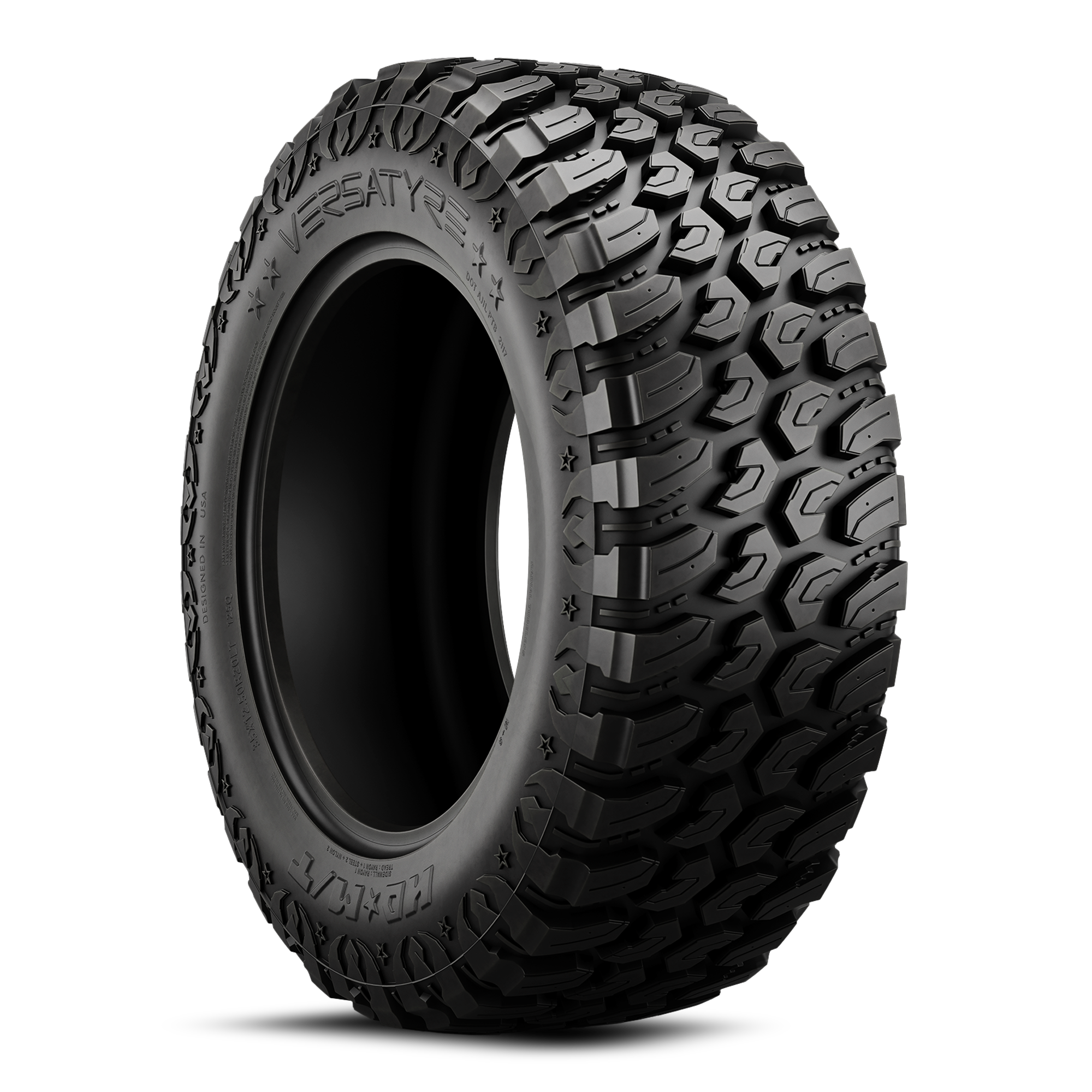
It’s no surprise that different types of tires are needed when you are taking your vehicle off the beaten path and into unpredictable conditions. Every experienced driver knows that tire size and tread have a direct impact on both safety and off-road performance. Additionally, checking the off-road tire size guide is always an essential step to understand the overall capability of your vehicle.
When you choose the right tires, you know that you have optimal ground clearance and handling abilities. In this guide, we are taking a deep dive into tire size for off-road vehicles, so you understand your options for down-sizing, plus-sizing, backspacing, and more. At Versatyre, our goal is to help you choose the right off-road tires with confidence.
How to Read Tire Sizes
To begin, look at the p-metric vs. inch tire sizes to understand aspect ratio, tire width, and wheel diameter. There are actually two different formats for these measurements, so it can be helpful to talk to an experienced team if you don’t understand what the numbers mean.
If the tires are using inch sizes (flotation sizes), then it will look something like this: 35×12.50R17. This number indicates the diameter first, which will help with your off-road tire comparison. In the unlikely situation where you need to convert metric to inches, we recommend that you use a tire size calculator.
Understanding Tire Plus-Sizing
Drivers who want to increase the size of their tire diameter need to learn about how tire plus-sizing for trucks works. You can increase the tire diameter and/or width, but it’s also important to ensure proper fitment with your vehicle. Our team can help.
Plus-1 and Plus-2 (as well as larger tire adjustments) will have an impact on the clearance of your vehicle, as well as the overall stance and performance. Not only do these tires change the look of your truck, but they also impact how it handles.
Some of the benefits of increasing tire size are to get better grip and clearance. But, bigger tires also come with some drawbacks, such as a change in gearing and potential rubbing against the wheel wells.
Wheel Anatomy & Fitment Essentials
When you look at the wheel width for off-road tires, this information determines the way the tire sits and how it is going to act when you are in off-road conditions. Wheel offset vs. backspacing impacts the turning radius and stance of the vehicle. You also need to consider the tire clearance around braking and suspension systems.
When upgrading the size of your tires, it’s essential that you know how to measure backspacing so that you can avoid issues such as rubbing, alignment problems, and fitment that causes safety concerns.
Off-Road Tire Fitment Guide
Here are a few things to consider when you are looking at the off-road tire size guide for your truck or SUV:
- Vehicle Measurements: It’s important to measure the wheel wells and fender liners on your vehicle to ensure that the tires will fit properly. Also, check to see how the suspension components will line up.
- Lift Height: Next, tire fitment for lifted trucks depends on the lift height. If you still have the stock setup, then you need to stick with smaller tire sizes. Lifting the vehicle will create more space so that you can go with bigger tires if desired.
- Vehicle Model: Your fitment will vary depending on the model of your vehicle. Always check with the experts to ensure that your tires are going to work with the make and model that you are driving.
- Other Modifications: If you are going with a wider setup, then you might need additional mods for the trimming or spacers.
Performance Impact of Larger Tire Sizes
There are different ways that larger tire sizes will impact the overall performance of your vehicle. For example, if you increase the tire size, then it will affect the gearing and speedometer accuracy.
One drawback is how larger tires reduce fuel economy and acceleration. But these are a trade-off to have other benefits like higher ground clearance and better traction.
Additionally, look at the load index and ply ratings so that you have a clear understanding of your vehicle’s towing capacity.
Common Tire Fitment Mistakes to Avoid
Talk to our experienced team at Versatyre, and we will help you avoid some of the most common tire fitment mistakes, including:
- Tire Brand Considerations: Side-by-side comparisons of different tire brands will show that not all tire sizes are created equal. For example, a 35” measurement can vary in actual size, depending on the brand that you choose.
- Offset and Backspacing: Never ignore the offset or backspacing, because these changes could have a negative impact on the stance (which affects safety). Additionally, it’s critical to check these details to avoid tire rubbing.
- Lifts and Tire Sizing: Always make sure that your lift matches the tire diameter. If your lift is too high or too low, then it could result in handling problems and safety issues.
- Load Index and Structural Strength: These ratings are critical, especially if you are planning to tow large loads.
- Alignment After Installation: It’s a mistake to skip tire alignment after your new tires are installed. Our team will make sure that everything is balanced and aligned correctly.
FAQ
What is tire plus-sizing?
“Tire-plus sizing” indicates both the wheel size and the proper wheel fitment and clearance for the vehicle.
What tire size fits my lifted truck?
Each vehicle is unique, which is why there isn’t a one-size-fits-all answer. Our team will provide personal recommendations after looking at your lift height, wheel offset, and fender clearance.
Do bigger tires affect the speedometer?
Yes, if you put bigger tires on your vehicle, then the speeds won’t show accurately while you are driving. Larger tire diameters will cause under-reporting of your speed.
Talk to Us at Versatyre for Personalized Recommendations
Our team offers a full range of options, making it as easy as possible for you to find the ideal tires that match your needs. In addition to off-road tires, we also have products that are ideal for daily driving.
When you talk to one of our tire specialists, we’ll explain how the off-road tire size guide works. Then, we can recommend the ideal tire sizes based on the type of vehicle that you have, as well as other modifications such as lift height and more.
Reach out to us anytime for more information. Our team at Versatyre is always just a phone call away.